
RESEARCH · WHITE PAPER · September 2026 · Policy research · 9 min
The energy affordability agenda starts at the meter.
Hawaiʻi’s clean-energy transition is also a household-cost and essential-service agenda. This paper sets out a practical, technology-neutral approach: reduce waste first, finance efficient thermal-electrical equipment fairly, and compensate verified grid value without transferring risk to customers.
100%
renewable electricity standard by 2045
36.8%
Hawaiian Electric 2025 generation RPS
<140% AMI
GEM$ on-bill income threshold
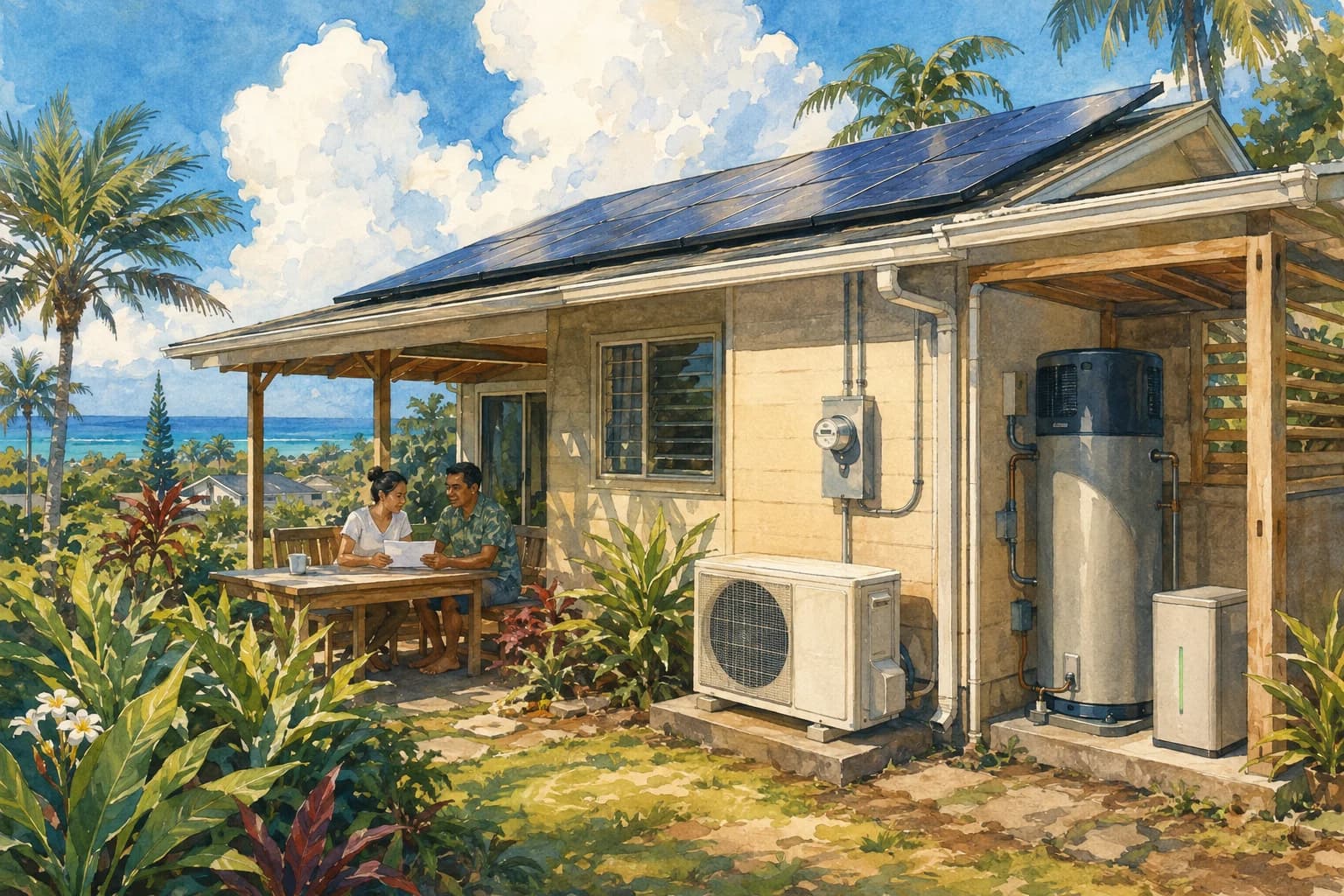
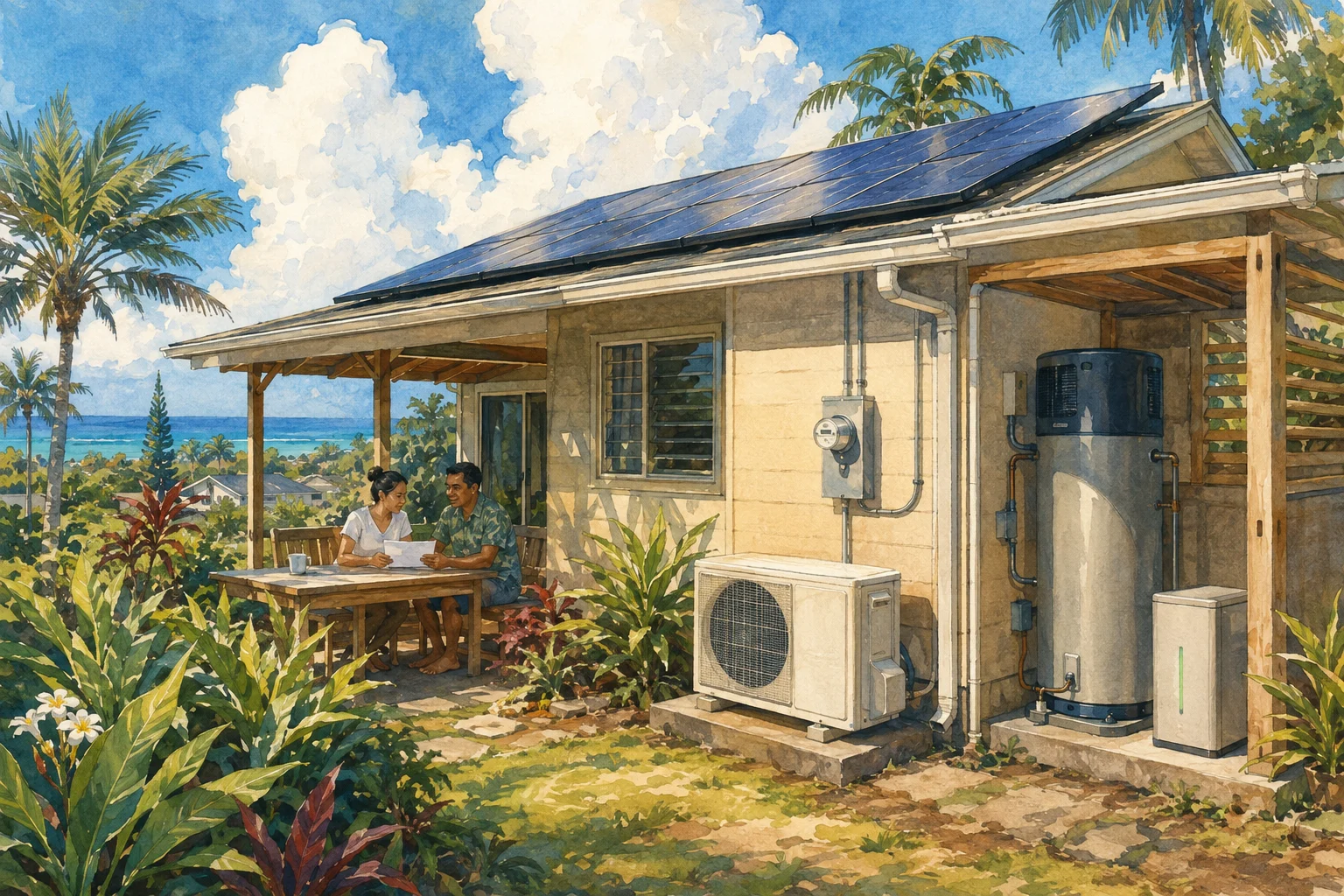
AI-generated concept · Household comfort, efficient equipment and a clear customer offer.
Starting point
Affordability must be measured at the customer bill.
Hawaiʻi law requires utilities to reach 40% renewable net generation by the end of 2030, 70% by 2040, and 100% by 2045. The statutory destination is clear, but it does not by itself decide who receives lower bills, better comfort, or reliable service during an outage. Those outcomes depend on the cost, performance, and financing terms of the equipment installed at customer meters.
Hawaiian Electric reported a consolidated renewable portfolio standard of 36.8% of generation for 2025 across Oʻahu, Hawaiʻi Island, and Maui County. That progress is material, but it also means the system still has a large transition ahead. Customer-side efficiency, storage, and flexible load should be evaluated as part of that transition alongside utility-scale generation, storage, and network investment.
The public program landscape is moving. Hawaiʻi’s eHale Energy Saver program describes forthcoming rebates for efficient cooling, heat-pump water heating, electrical upgrades, and whole-home measures, but the State says the launch remains subject to federal approval. Policy should not promise savings from a future program before eligibility, contractor capacity, and funds are confirmed.
2030
first remaining RPS milestone
2045
statutory 100% deadline
AI-generated concept · Household comfort, efficient equipment and a clear customer offer.
Measure stack
Comfort, hot water, and food preservation are energy services.
Hawaiʻi’s renewable-energy statute expressly recognizes heat-pump water heating and ice storage among energy-efficiency technologies in its definition of renewable electrical-energy savings. The accounting language is not a product endorsement or a guarantee of savings; it is a useful policy signal that thermal management belongs in the State’s energy toolkit.
The right unit of deployment is a verified service package, not a branded appliance. A household package may combine high-efficiency cooling, water heating, controls, a critical-load design, solar, and storage where appropriate. A commercial package may combine HVAC, refrigeration, water heating, thermal storage, and battery controls. Each should be sized from actual load, permitted for the site, commissioned after installation, and backed by maintenance and warranty obligations.
Resilience claims require the same discipline. A battery does not automatically keep a refrigerator, medical device, or cooling system running during an outage. The outcome depends on the critical-load circuit, state of charge, equipment demand, duration, islanding design, communications, and maintenance. Public incentives should pay for demonstrated capability rather than generic backup-power marketing.
2–3×
HPWH efficiency range cited by HGIA
0
unverified outage promises accepted
01 / 03
Starting point
AI-generated concept · Household comfort, efficient equipment and a clear customer offer.
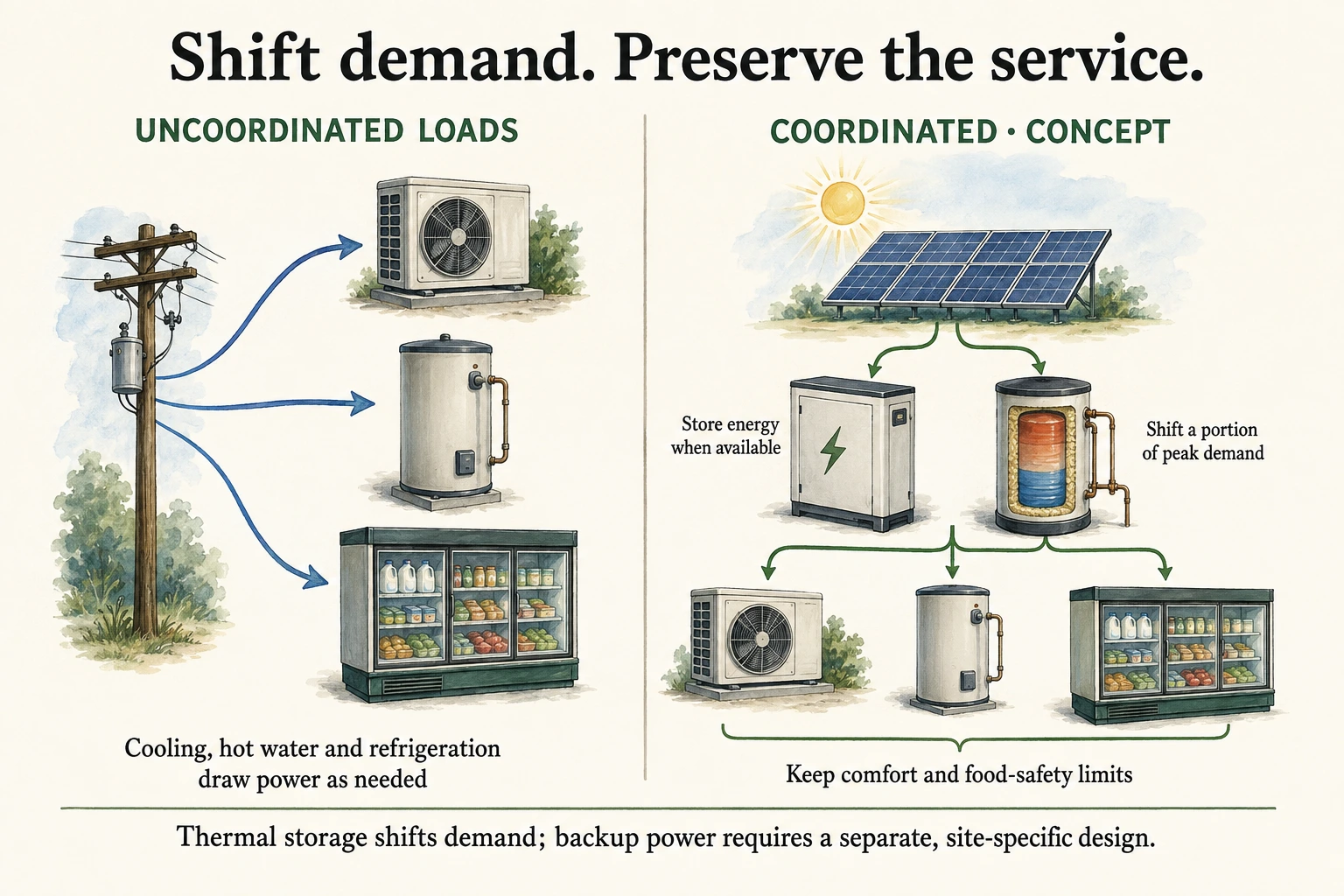
AI-generated concept · Household comfort, efficient equipment and a clear customer offer.
Access
Use finance to spread savings, not to shift risk.
Hawaiʻi already has a useful foundation in the Green Energy Money $aver, or GEM$, on-bill program. It is meter-tied rather than person-tied, is available to qualifying low- and moderate-income customers, and offers terms of up to 25 years at a published fixed rate. It also requires an estimated post-installation bill-savings threshold before approval.
The next step is not to replace existing programs with a new financial product. It is to coordinate rebates, inclusive on-bill finance, contractor quality assurance, and utility compensation so a customer sees one plain-language offer. Savings estimates should be conservative, include the program charge, and be re-tested after commissioning.
PMF recommends a no-harm affordability rule for priority households: no enrolled customer should see a net bill increase caused by the program. Grid-services revenue can improve the economics, but it should be treated as shared upside unless it is contractually established, independently modeled, and protected from unreasonable dispatch penalties.
25 years
maximum GEM$ financing term
5–15%
current GEM$ savings thresholds by need
03 / 03
Access
AI-generated concept · Household comfort, efficient equipment and a clear customer offer.
Evidence and implementation
Implementation update: affordability as a delivered outcome
September 7, 2026 update. The next step is to connect household service quality with accountable financing and procurement.
Evidence reviewed September 7, 2026
Use national models to structure questions
Evidence & PMF analysisResearch model · source context
The Homegrown Energy methodology makes equipment, housing, capital-cost, and financing assumptions explicit. That structure is useful, but its national modeled results do not measure savings for a particular Hawaiʻi household.
Sources: Homegrown Energy technical methodology (Rewiring America)
PMF recommendation
PMF recommends a local assessment covering existing equipment condition, energy prices, occupancy, and unmet service needs. Publish the counterfactual used in each savings estimate. An upgrade replacing failed equipment should be compared with a plausible replacement, while an added comfort service needs a separate affordability assessment.
Distinguish access support from grid-service revenue
PMF recommendationPMF recommends two transparent funding accounts. Access support pays for public priorities such as affordable housing quality, essential cooling, and inclusion of households unable to finance an upgrade. Grid-service revenue pays for verified availability and delivery. A project may receive both, but the program should not describe the same payment as two separate benefits.
This distinction lets a household receive a worthwhile improvement even where its feeder has little immediate capacity need. It also prevents grid customers from being charged an unsupported premium for social benefits that should have an explicit funding decision.
Give the savings commitment an operational owner
PMF recommendationPMF recommends naming the party responsible for checking the first bills after commissioning and resolving a shortfall. The review should distinguish weather, changed occupancy, expanded comfort, tariff effects, and equipment failure. The customer should receive the explanation and any corrective action in ordinary language.
A program’s success measure should include how quickly it fixes a poor result. Publish aggregate repair times, disputes, hardship interventions, and changes to customer charges. An affordability promise becomes credible when it has a funded remedy and an accountable administrator.